

How To Install A Second Router As An Access Point
Affiliate Disclosure: As an Amazon Associate I earn from qualifying purchases.
If you have a big home or even just a large home network with lots of devices, adding a second router can not only better coverage both wired and wirelessly, but also improve overall performance. In this commodity, we'll await at how to set ii routers on the same network, as well every bit some of the benefits and some alternatives yous may want to consider.
Can Two Routers Be Fix on the Aforementioned Network?
Two, or even more if you wish, routers can absolutely exist prepare upwards on the same domicile network.
A 2d router can be fix to human activity as a range extender, or it tin can be configured to share the same SSID as the primary router, pregnant the devices on your network will connect to whichever router provides the stronger signal.
Y'all may also like: 7 All-time Wireless Routers for Lots of Devices: Buyer's Guide
What Are the Benefits of Having Two Routers on the Same Network?
Setting up a dual-router dwelling house network comes with a number of benefits, including:
- More connectivity for wired devices: It is likely that your master router just has a limited number of LAN ports available to connect wired devices to it (five if you are lucky). Adding a 2d router immediately provides boosted Ethernet ports that provide more devices with wired connectivity without the need for a network switch.
- Meliorate back up for mixed wired/wireless setups: Having a second router is useful if yous accept a wired home network simply also want to connect some Wi-Fi enabled devices. The routers can be separated in the sense that the wired devices will continue to connect to the primary router, whereas all of the wireless devices would connect to the secondary. This is particularly helpful if the wired devices are positioned at the other end of the home to the wireless devices.
- Isolation for certain devices: If certain devices in your home utilize the network connexion especially heavily, dual routers tin be set up to isolate certain devices and prevent a large corporeality of network traffic affecting the other devices. Every bit an example, yous may want to look at isolating a detail PC that frequently transfers large files or plays a lot of online games from a smart TV that is streaming video.
- Improved wireless coverage: A second router can simply be used to extend an existing Wi-Fi connexion, greatly improving the coverage in your habitation and providing even those far away devices with a stable wireless connection.
- Backup device: Information technology doesn't hurt having a working backup router available in case 1 of a sudden fails.
How to Set up Two Routers on the Same Network
Now you know the benefits of adding a 2nd router to your home network, let's take a look at how to actually gear up it upwardly.
When it comes to connectivity between the two, yous accept a choice of a wired or wireless connection. Nosotros will cover both methods below, but in both cases, there are a few things that you need to consider and set up first.
Firstly, you lot need to decide which of the routers volition be the principal and which will exist the secondary. Ideally, you lot volition pick the newer, fully-featured router to be the chief, but if you take two of the aforementioned router it doesn't really affair which is which.
Adjacent, place both of the routers shut to the computer you will be using to configure them both. This is merely for ease of access; both routers tin can exist moved to their permanent location later.
Finally, you demand to decide what you want to achieve from the second router as there are two unlike connection types you can setup: LAN-to-LAN or LAN-to-WAN.
- LAN-to-LAN: This extends your existing network connectedness and SSID to include the second router. LAN-to-LAN connectivity allows you to share files betwixt devices regardless of which router they connect to.
- LAN-to-WAN: Creates a 2nd network within the master network which allows you to place restrictions on any devices that connect to it and therefore is a good thought if you lot wish to isolate certain devices. A LAN-to-WAN setup doesn't support the sharing of files across the two divide networks.
Got all that sorted? Let'due south motility on to performing the setup.
Related article: What Is the WAN Port on My Router For?
Setting up a Second Router Using Ethernet
1. Connecting to the Primary Router
First things outset, we demand to perform the initial setup on the main router. Make certain the router is first connected to your modem via an Ethernet cablevision, and so connect the calculator you are using to the router using some other Ethernet cablevision.
Some Windows PCs and Macs will no longer come with a built-in Ethernet port, so you may need to purchase either an Ethernet to USB adapter to brand that wired connection.
2. Logging in to the Primary Router
This master router will be taking control of the connection to the Cyberspace through the modem and should be set upwards as if it were the only router in the domicile.
Yous'll need to admission the router'southward spider web interface which is typically washed by inbound the router's IP address into the URL bar of your web browser and then logging in.
Unless you lot have previously changed the username and password to admission the router, which is recommended for security purposes, the router will oft transport with a card containing these credentials.
Recall that the settings of each router can vary drastically depending on the manufacturer and model. If yous ever get stuck finding a particular setting, it is recommended that you lot consult the router's transmission or the support section on the manufacturer's website.
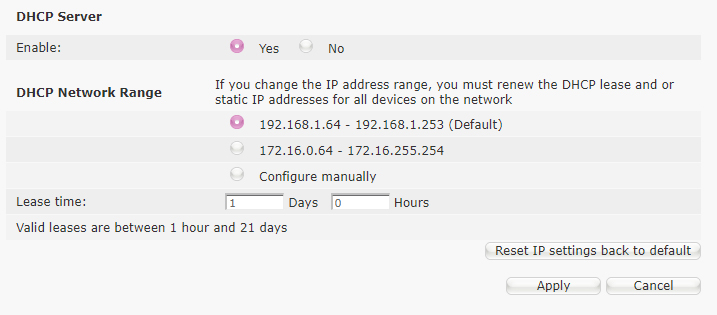
3. Change the DHCP Settings
If you have decided on setting upwardly a LAN-to-LAN network, yous can skip over this stride every bit the DHCP settings can be left as they are.
If setting up a LAN-to-WAN network, you will need to prepare the DHCP to provide addresses betwixt 192.168.ane.2 and 192.168.1.50.
Once these changes have been saved, log out of the router and disconnect your computer from information technology. That is all of the work completed on the primary router.
4. Configuring the Second Router
Connect and login to the 2nd router as you did with the first and navigate to the screen that allows you to ready the IP accost of the router itself.
What you gear up the IP address to is of import depending on whether you lot are going LAN-to-LAN or LAN-to-WAN
- LAN-to-LAN: Change the IP address to match that of the primary router, but increase the second-to-last digit by one. So if the primary router has an IP accost of 192.168.1.1, the second router needs to utilize 192.168.two.one.
- LAN-to-WAN: Change the IP address to 192.168.ane.51. Notice this is just exterior of the DHCP range we set up on the chief router.
Once the IP address is set up, just make sure that the subnet mask matches that of the master router and that you disable UPnP if the pick is there.

v. Configuring DHCP on the Second Router
Once again, this step is different depending on whether yous are setting up LAN-to-LAN or LAN-to-WAN.
- LAN-to-LAN: Plough off the DHCP service completely
- LAN-to-WAN: Change the DHCP to provide addresses between 192.168.2.ii and 192.168.two.50
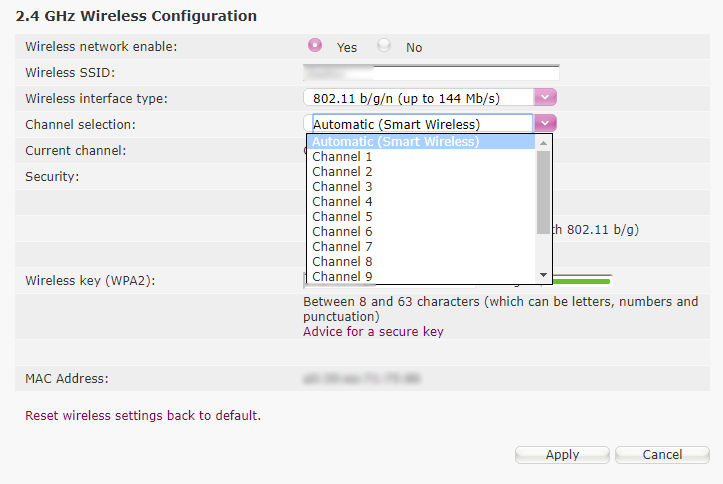
6. Change the Wireless Channels
If both of your routers are wireless, equally most are these days, you volition need to manually alter the channels so the two signals don't interfere with 1 some other. This is hands done by setting the primary router to utilise any aqueduct between one and half dozen and and then setting the second router to use channel xi.
7. Position the Routers
And then that's all of the configuration work on both routers done. Make sure to salvage changes, log out and disconnect the router from your figurer equally it is now time to identify both routers where you demand them.
Just recall, y'all will need to use an Ethernet cable to connect the two together.
For convenience and and then you don't have more wires than needed trailing around your abode, y'all may want to place the primary router adjacent to the modem if you lot are using one that is a carve up device.
8. Connect the Routers
Regardless of which network setup you are using, the routers need to connect to each other, but the port y'all must use volition differ.
- LAN-to-LAN: Plug one end of the Ethernet cable into one of the available LAN ports on the back of the primary router, and then plug the other end into an available LAN port on the back of the 2nd router.
- LAN-to-WAN: Plug 1 end of the Ethernet cable into one of the available LAN ports on the back of the primary router, and then plug the other end into the WAN port (may be labeled as "Internet") on the dorsum of the second router.
Once connected, you have successfully connected to a second router to your dwelling network using a wired connexion.
Setting up a Second Router Using Wireless
1. Is Your Equipment Even Compatible?
Before going downward the road of setting up the second router wirelessly, you will outset brand sure that information technology is even possible using the equipment you have.
Most wireless routers tin be used equally a wireless access point or range extender, however, not all can be used to create their own network within the primary router'due south network.
You must ensure that your secondary router has a "span" or "repeater" mode.
If y'all are unsure, check the manual that came with the router or check on the manufacturer'due south website.
ii. Connecting to the Master Router
If you lot oasis't already, you lot volition need to perform the initial setup on the primary router. Make certain the router is first continued to your modem via an Ethernet cable if you lot have one, then connect the reckoner you are using to the router using a split Ethernet cablevision.
Some Windows PCs and Macs will no longer come with a built-in Ethernet port, and so you may need to purchase either an Ethernet to USB adapter to brand that wired connection.
3. Logging Into the Primary Router
This primary router will exist taking control of the connection to the Internet through the modem and should exist fix as if it were the only router in the home.
Y'all'll need to admission the router'south web interface which is typically washed by entering the router's IP address into the URL bar of your web browser and so logging in.
Unless you have previously inverse the username and password to access the router, which is recommended for security purposes, the router will oftentimes ship with a card containing these credentials.
Remember that the settings of each router tin can vary drastically depending on the manufacturer and model. If you lot always get stuck finding a item setting, it is recommended that you consult the router'due south manual or the support section on the manufacturer's website.
Once y'all have completed the initial setup, y'all tin log out and disconnect from the router every bit we won't need to connect to the primary again.
4. Logging Into the 2d Router
Now it is time to connect the second router to your computer using an Ethernet cable, logging in and opening the configuration folio.
You volition need to browse to a setup page that is likely to be called either "Internet" or "Wireless".
The router does not need to connect to the modem (if y'all accept 1 equally a separate device) at this stage.
5. Enable Bridge Mode
Inside the setup page, y'all are looking for "Network Mode" nether "Connection Blazon" or "Wireless Style".
Select "Bridge Mode" or "Repeater Mode" depending on the model of your router (both mean the aforementioned matter).
If you do not see this option, it is likely that the router doesn't back up bridging and y'all will therefore either purchase a router that does or connect the two routers over Ethernet as described above.
half-dozen. Prepare the 2d Router's IP Address
The IP address of the second router must be set to autumn within the DHCP range of the primary router.
For example, if the primary router has a DHCP range of 192.168.1.2 to 192.168.one.50, y'all will demand to set the second router'due south IP accost to be anything in between.
Whilst configuring the IP accost, make sure the subnet mask matches that of the main router.
seven. Requite the Second Router a Unique Proper noun
It is recommended that you give the second router a unique name and so it is articulate which router yous are connecting to when joining your devices to the network.
You may want to name both routers depending on the position of them in your dwelling, but it really doesn't matter what name you choose.
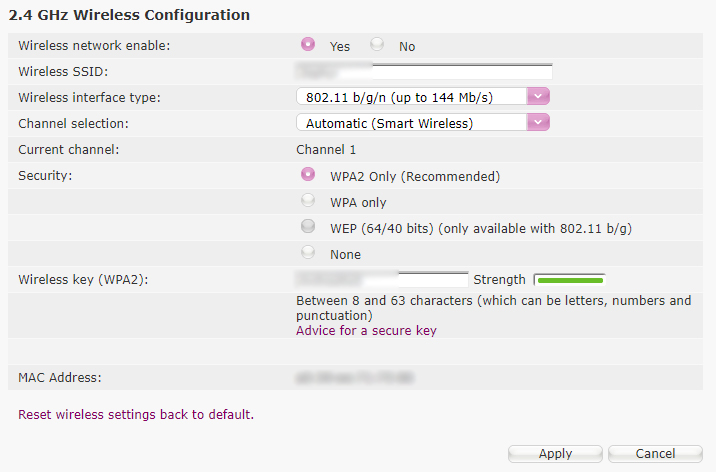
Brand certain both routers are set to utilize WPA2 which is likely to be the case out of the box.
You may also want to make sure both are gear up to use the aforementioned countersign for ease of utilize; just make sure it is something secure that cannot be easily guessed to assist avoid whatever unauthorized access.
eight. Position the 2d Router
The configuration of the 2d router is now consummate, and then yous can identify information technology in an area of your home where y'all want it to repeat the signal provided by the principal router.
For a good connection betwixt the routers to be maintained, it is recommended that the second router is placed where it receives at least 50% of the signal strength from the master router, just the higher the ameliorate.
If there is a straight line-of-sight betwixt both routers, yous should discover the 2nd router receives the strongest betoken compared to any walls being in the style.
Alternatives to Setting up a 2d Router
Setting up a 2d router on your home network is relatively easy, but there are a few alternatives that volition achieve the aforementioned result of extending your network, but without any router, IP address or DHCP configuration being needed.
You may want to instead expect at adding a network switch instead of a second router. Switches come vary in terms of the number of available Ethernet ports they can add to your network and the type: managed or unmanaged.
For a Wi-Fi network, you may want to consider simply calculation a wireless access signal rather than an additional router. These can help extend wireless coverage throughout your domicile and just employ a unmarried LAN port on your primary router.
Glossary
We mentioned several technical terms in this article, many of which are abbreviated, then hither is a brief description of each to better your understanding of these unremarkably institute terms you'll undoubtedly come up across when designing and building your home network.
- LAN (Local Area Network): A local network that allows the devices connected to information technology to communicate with each other.
- WAN (Wide Surface area Network): A network that connects multiple LANs with each other.
- SSID (Service Set Identifier): The name of a Wi-Fi network.
- LAN-to-LAN: Extends an existing network connectedness and SSID to a second router.
- LAN-to-WAN: Creates a second network inside a primary network.
- IP Address (Net Protocol Address): Numerical label assigned to each device connected to your network.
- DHCP (Dynamic Host Configuration Protocol): Dynamically assigns an IP address to each device connected to your network.
- Subnet Mask: Masks an IP accost and divides it into a network address and a host address.
- UPnP (Universal Plug and Play): Permits devices to seamlessly detect each other's presence on a network.
- WPA2 (Wi-Fi Protected Access Two): A blazon of encryption to secure Wi-Fi networks.

Source: https://homenetworkgeek.com/how-to-setup-two-routers-on-the-same-network/
Posted by: harristhilethe.blogspot.com
0 Response to "How To Install A Second Router As An Access Point"
Post a Comment